Sovereign surveillance // Edge-deployed
The system that learns an operator's craft — and takes it over.
MIMIR is a decision layer for sensor-based area surveillance and counter-UAS. It reads the sensor picture, reasons about what is in it, and presents ranked alarms — each carrying its evidence, its provenance, and a recommended action. The operator decides. Then it learns from it.
Live tests // Älvdalen, 16–18 September 2026
FMV Battleweek results
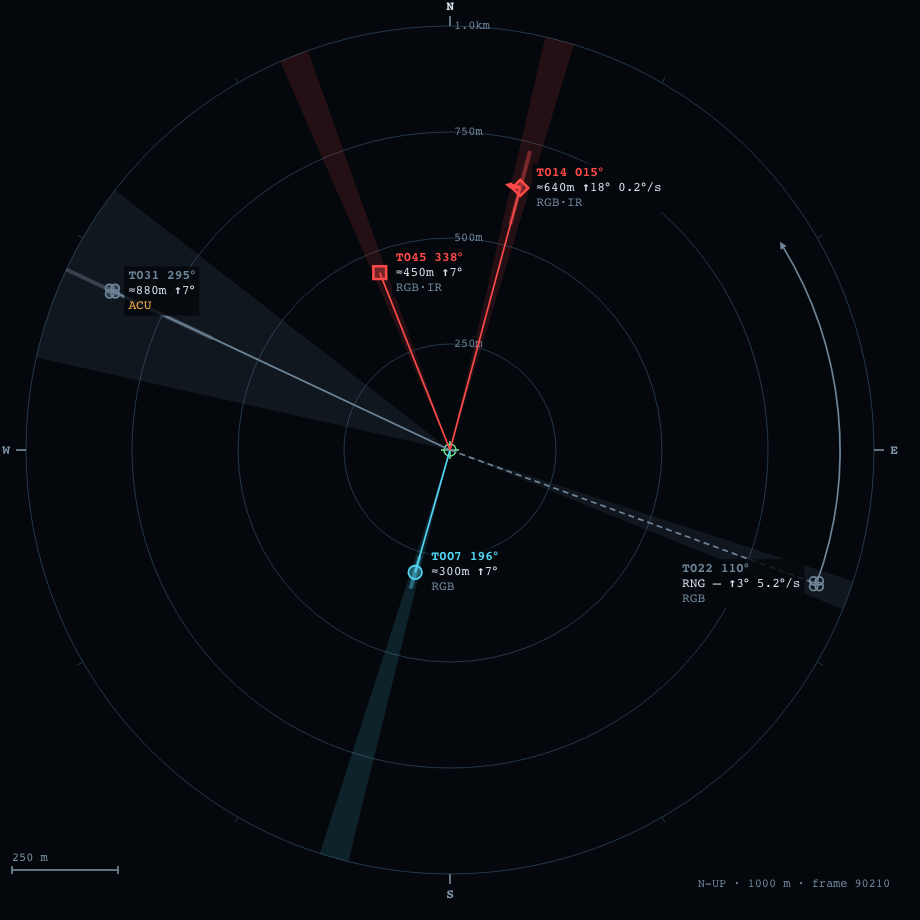
Three days live on a real sensor tower: FPV drones, ground vehicles and a Shahed-type fixed-wing drone. MIMIR recorded the whole flight and read the drone's zig-zag from sound before any camera saw it.
All numbers from MIMIR's own logs · Hosted by FMV Test & Evaluation
Sensors scale.
Judgement doesn't.
A surveillance installation produces more contacts per hour than a watch team can adjudicate. The constraint is not the number of cameras — it is the number of people who are good at looking at them. That expertise is tacit, expensive to build, and it walks out the door when an operator rotates. Nothing in a conventional system captures it.
And the obvious fix — automate with a pre-trained model — collides with the requirement European buyers now write into every specification: prove what it learned, and from whom.
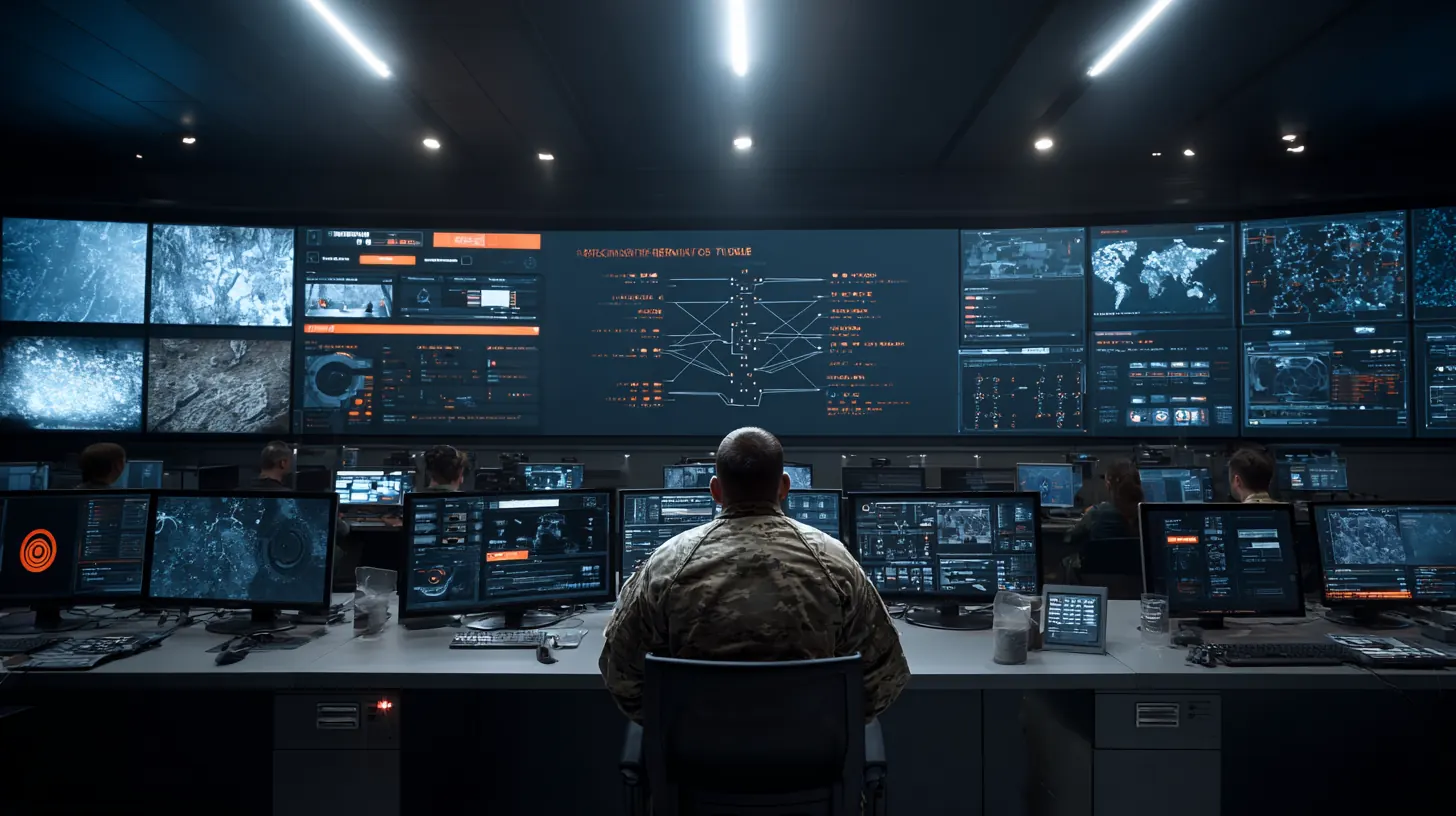
Everyone else logs footage.
MIMIR harvests judgement.
An apprentice, not another alarm queue.
Every alarm answers five questions, in order — what, where, when, how serious, what action. And every consumed label, assessment, decision and retraction lands in a SHA-256 hash chain that the console re-verifies in the operator's own browser, on screen.
Three actions per recommendation — approve, raise, reject — and each button face names the effect of this recommendation, not a generic verb. Escalation always confirms. Undo is real: retracting reopens the recommendation and appends a retraction to the log. Nothing is erased.
- Display
- Day / Night / NVG monochrome green
- Density
- Normal / Gloved-hand
- Languages
- Swedish first · English
- Surfaces
- Seven — a hard limit, so training is short
Memory with a half-life.
MIMIR keeps a persistent memory on the edge box: every contact, assessment and decision indexed three ways — by keyword, by meaning, and by association across a typed context graph. Retrieval runs all three in parallel, merges the rankings, and hands the model only the strongest context. Memory improves what the machine is given to reason with. Nothing more.
- Retrieval
- Keyword · semantic · graph activation — three retrievers in parallel, merged by reciprocal rank
- Reranking
- The shortlist is re-scored on the box before it reaches the model
- Context graph
- Typed entities and relations. Associations strengthen with co-occurrence
- Decay
- Edge weights fade nightly — a 365-day half-life lets stale links forget themselves
- The corpus
- Kept separate from memory by design, so operator judgement is never pruned

The corpus is the product.
The alarm queue is the surface. Underneath it, every model prediction is joined to the operator's actual judgement — in a protected database, with full provenance. MIMIR watches a skilled operator adjudicate, measures how consistently they judge, and drafts rules from what it counted.
-
1
Watch
Every judgement is captured against what the machine predicted, in a corpus that is never pruned. Capture only — it changes no model behaviour.
-
2
Measure
Agent Krippendorff — named for the α statistic that measures whether coders agree — asks how consistently this operator judges this class of contact. The statistics are deterministic; only the narrative is generated.
-
3
Propose
Where behaviour is consistent, a rule is drafted from counted evidence and staged for review — never auto-applied. The rule comes from arithmetic, not a model's guess.
-
4
Refuse
It will propose filtering animals and objects. It will not draft a filter that hides a class of human contact — a hard-coded boundary in the source, because drafting a filter that hides people is not the system's call to make.

Autonomy is earned, not promised.
-
1
Shipped
Watch
Every prediction joined to the operator's judgement in a protected corpus; second opinions captured.
-
2
Shipped
Measure
Intra-operator consistency per class of contact. The profile is surfaced to the operator — their measure is theirs to see.
-
3
Shipped
Propose
Rules drafted from counted behaviour, bounded to noise classes, staged for review.
-
4
Designed, not built
Calibrate
Dual Krippendorff α — agreement within and between operators; confidence calibration.
-
5
Not built. No such path exists in the code
Handover
A named class of judgement runs without a click — above an agreed threshold, reversible, audited.
The graduation criterion
A class of judgement becomes a candidate for handover when the machine agrees with expert operators as closely as those operators agree with each other. Human experts do not agree perfectly; that disagreement band is the honest bar, measurable per class of contact rather than asserted globally.
Autonomous in judgement. Never in action.
There is no weapons control and no autonomous outbound action: a structural invariant, enforced in the build system rather than by configuration. Relieving an operator of four hundred animal contacts a night is not replacing them at the trigger.
Built for the one who must prove everything.
Honesty is upstream of learning. A decision taken while looking at a fabricated range, a guessed position or a simulated contact believed to be real is a corrupted training example — you cannot learn a craft from observations of an expert responding to things that were not true.
- No position from a null GNSS fix
- Zero-zero is a real place in the Gulf of Guinea. Without a georeference, nothing is plotted, not even at a guess.
- No fabricated range
- Measured shows 412 m. Inferred shows ≈412 m. Never measured shows —.
- No line across a gap
- A track line is never drawn across a measurement gap: that would claim the contact was somewhere it was never observed.
- Simulation announces itself
- A simulated picture gets a top-of-stack banner. If any contact is simulated, the whole picture is treated as simulated.
- Colour is never the only signal
- Colour plus glyph plus text, always — a hard requirement once NVG mode removes hue.
- Absence is stated
- Empty states are specific: "No alarms — watch in progress." Never "No data."
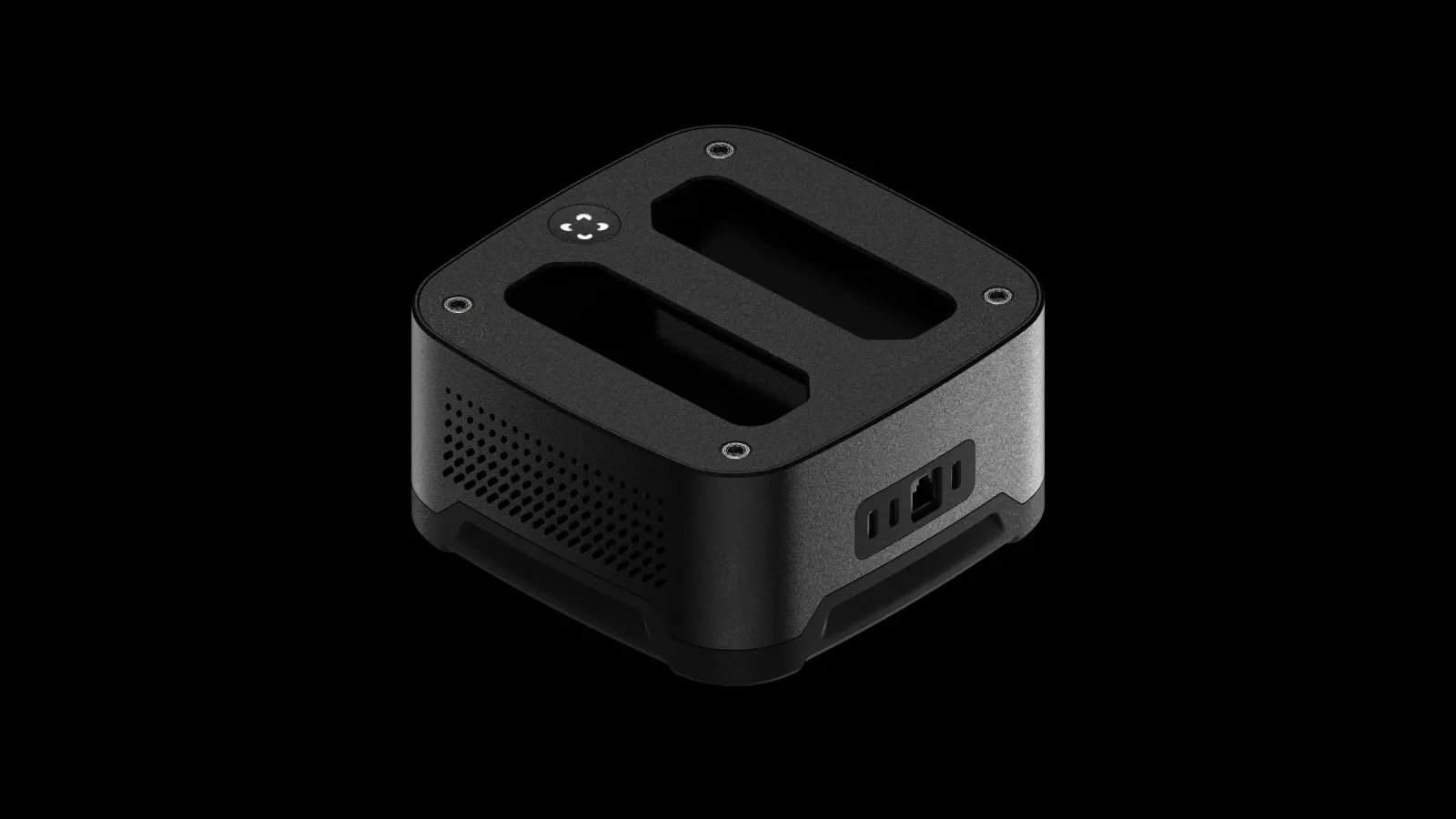
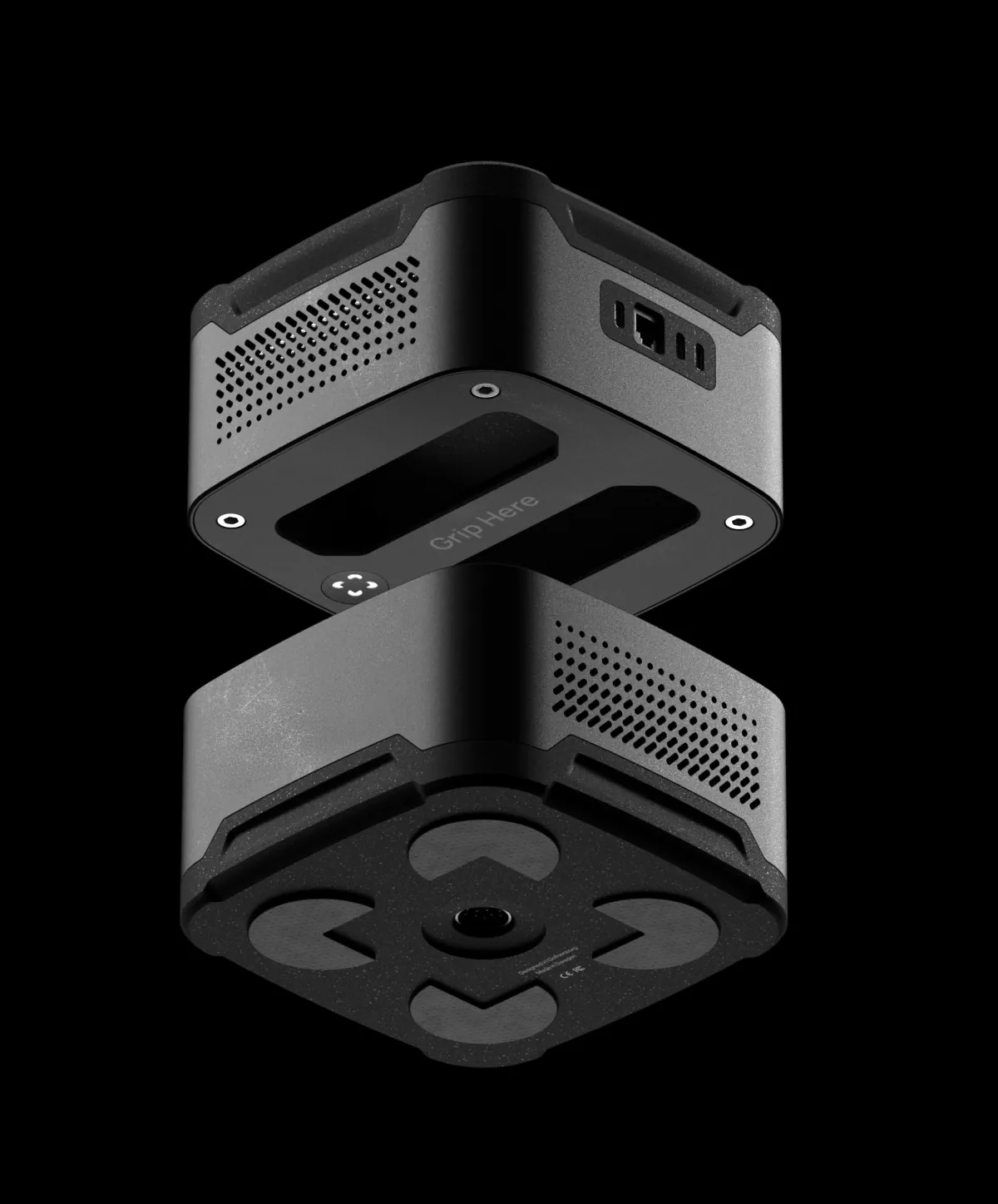
One rugged edge computer.
MIMIR is not a sensor. It improves whatever sensors you already have, and it runs where they run: offline, air-gapped, no cloud, no foreign dependency. That is what makes learning from operational decisions legally tractable at all.
- Hardware
- NVIDIA Jetson AGX Thor
- Network
- None required for operation
- Cloud
- None. All inference is local
- Install
- Single container stack — one command
- Rollback
- Three commands. Decision history survives a downgrade
- Shape
- One box per watch position. Escalations shared across consoles
It speaks the standards you already field.
The picture arrives on a wire bound to STANAG 4774 / 4778 confidentiality labels, renders in MIL-STD-2525D and NATO APP-6D symbology, and leaves as Cursor-on-Target that ATAK, WinTAK and SitaWare read natively. Underneath: seven video backends behind one adapter interface, and a documented machine API generated from the code. MIMIR makes any perception feed adjudicable.

- STANAG 4774 / 4778
- MIL-STD-2525D · NATO APP-6D
- MIL-STD-2525C
- Cursor-on-Target → ATAK · WinTAK · SitaWare
- OpenAPI — generated from the code
- JSON · CSV · CoT export
Built, not pitched.
Stated precisely, because credibility is the product
Capture is shipped and changes no model behaviour. Calibration and handover are designed and flagged, not built. No decision runs without a human click today. The corpus is accumulating; the handover has not begun.

Expertise is the scarcest input in defence surveillance.
MIMIR captures it, measures it, and scales it.
Request a briefing
Briefings under NDA · Live demonstration on real hardware